Categories
Japan 2025

Fushimi Inari Taisha Shrine

Today we visited a very important Shinto shrine in Kyoto, Fushimi Inari Taisha.

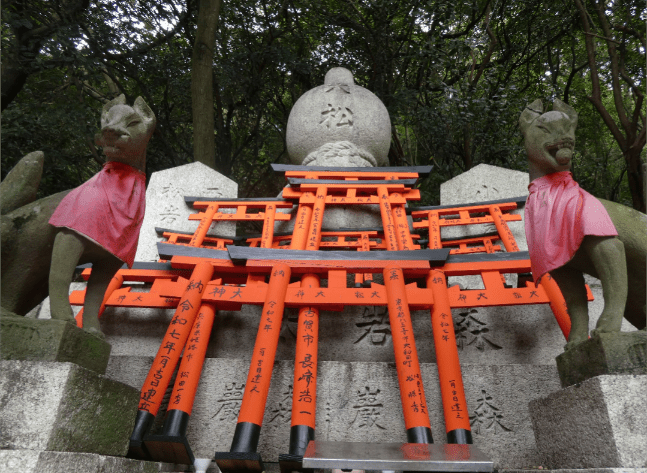
Inari shrines are the most familiar shrines to Japanese people. There are said to be some thirty thousand throughout the country. Fushimi Inari Taisha is the head shrine with which all the others are affiliated. In the 1300 years since its establishment in 711 CE, people have gathered here to pray for bountiful harvests, business prosperity, the safety of their home and family and the fulfillment of all kinds of other wishes.

Fushimi Inari Shrine is not a UNESCO World Heritage site on its own, but it is located within the “Historic Monuments of Ancient Kyoto”, which is a UNESCO World Heritage site. It is famous for its winding paths lined with 10,000 vibrant orange torii gates that lead up the sacred Mt. Inari, 233 metres (764 ft) above sea level. There are many minor shrines along the path, most with the characteristic fox statues. Foxes are considered the divine messengers of Inari Okami, the Shinto god of rice, prosperity and foxes.

Monica, Ryan and I made the trek up the mountain along with thousands of other tourists. Photo opportunities without people in the shot are almost impossible but we did get a few. 2.5 hours later we were back at the bottom, soaked with sweat, legs shaking and very proud of ourselves that we did it.

By noon, we had returned to our hotel to rest, do a bit of laundry and edit photos. In the afternoon, we took the bus back to the Gion district we had visited before, enjoyed some matcha icecream and then walked along the Kamo River back to the hotel.

In the evening, we joined our group for a bite to eat and a cocktail at the top of Kyoto Tower. This was goodbye for some who were continuing on to other destinations. Tomorrow we will return to Tokyo to prepare for the flight back to Canada.

Categories
Japan 2025

Kinkaku-ji Temple and Nijo Castle

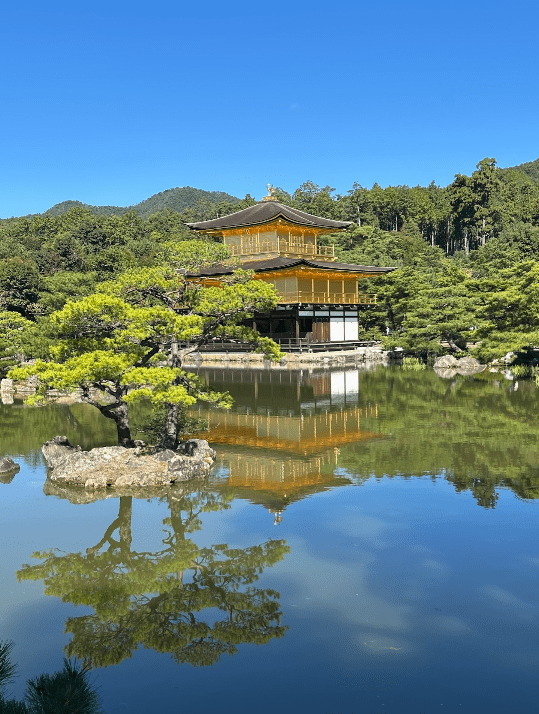
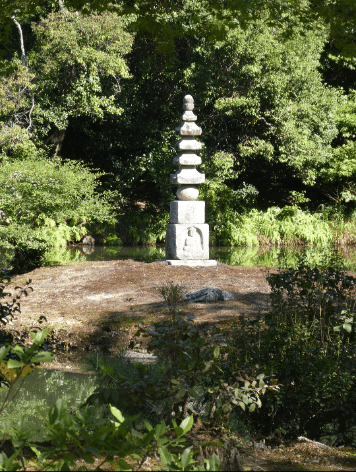
Today we visited two more UNESCO World Heritage sites starting with Kinkaku-ji Temple to the north of Kyoto. Better known as “The Golden Pavilion”, this Buddhist temple’s main attraction is the 3-story pagoda in the middle of a small lake. The top two floors are completely covered in gold leaf and it shone brightly for us on this beautiful sunny day. We strolled through the peaceful and serene zen gardens while birds twittered in the bonsai trees all around. Of course we purchased souvenirs at the gift shop.

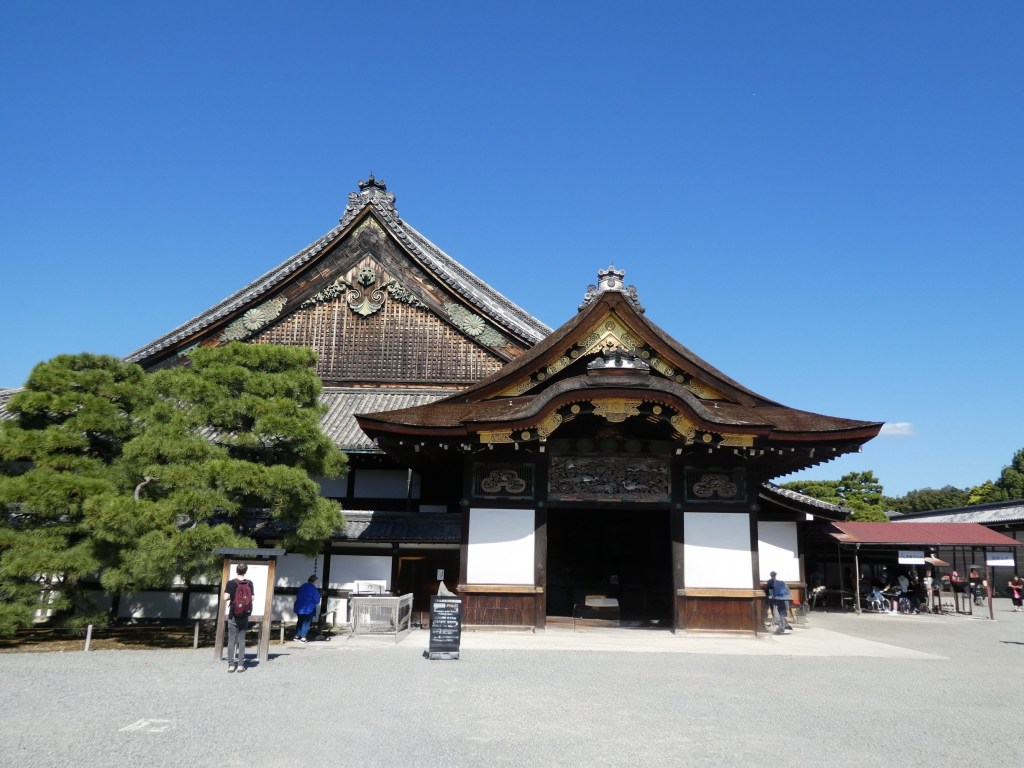
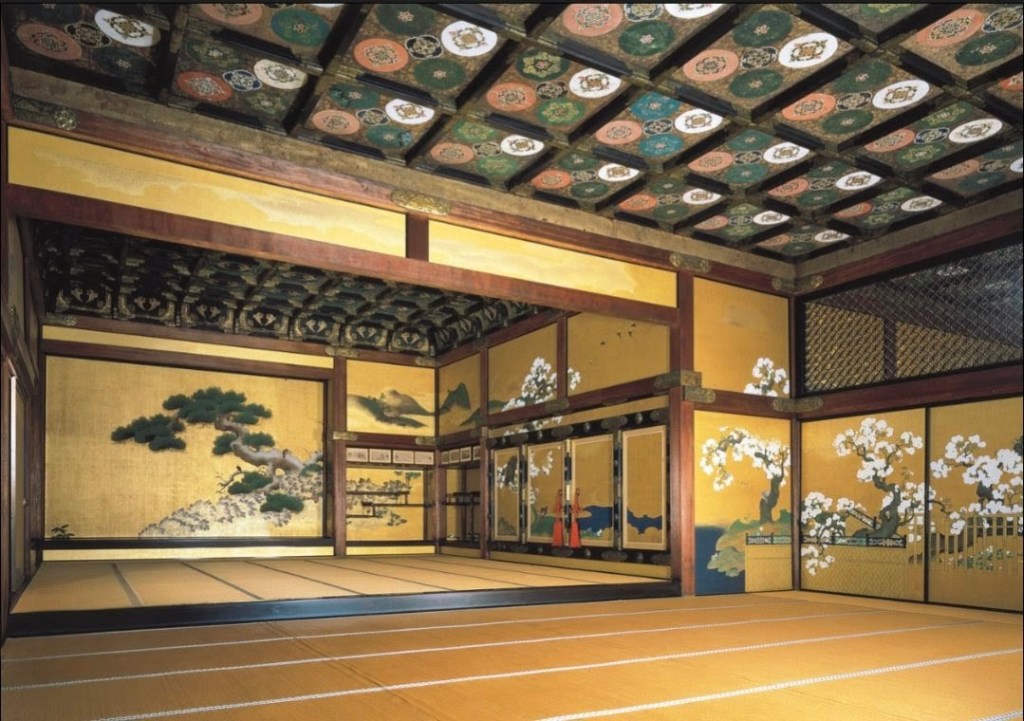
Next we visited Nijo Castle. It was built in 1603 as the Kyoto residence of Tokugawa Ieyasu, the first shogun of the Edo Period (1603-1868). Photos are not allowed inside so I added some pics from the website to show the beautiful interior. It is a sprawling complex decorated with sliding screen paintings by the Kano school, the greatest school in the history of Japanese painting, as well as colorful transom carvings and decorative metal fittings. It is a gorgeous architectural masterpiece befitting a shogun’s palace.

On our own for a free afternoon, we found lunch at a small family-run cafe complete with interior gardens and ishi-dōrō or stone lanterns. The hostess welcomed us and told us this building was the former residence of her grandmother and that her mother was born here. The hostess and her husband had opened the cafe one year ago and gave us cookie souvenirs to commemorate the anniversary. The almond toast and chai ice cream were excellent.

After lunch, we visited the Samurai-Ninja museum to learn about the history of Japan and the roles of the Samurai (warriors) and ninja (spies/assassins). An excellent guided tour ended with a shuriken (ninja throwing star) contest. Ryan did not win but came close. The entire experience was not only educational but great fun too. Ryan was in his glory.

Supper was at a restaurant near our hotel… an oishī (delicious) assortment of snack food plates washed down with beer.

In the evening, our guide, Shizuka, reserved tickets for our entire group to see a 50-minute show at the Gion Corner Theater in the Geisha district. What a show! We saw seven short performances, each 5-10 minutes some of which are classified as World Heritage Intangible practices. Chanoyu (Geisha Tea Ceremony), Ikebana (flower arrangement), Koto music (14 stringed wooden zither plucked with finger tips), Bugaku dance (performed by Maiko… Geisha apprentices), Kyogen comedy, Bunraken puppet theater and Noh play (Japanese dance and song performed by masked actors). Photos are not allowed so, once again, I have included shots from the program brochure.

Categories
Japan 2025

Sanjūsangendō Temple and Gion Walking Tour

After a speedy ride through the breath taking mountain range of south central Japan while enjoying a yummy Bento box lunch, we arrived in Kyoto and we’re greeted by our guide for the second half of the tour, Shizuka.

We immediately set out to visit the first of several UNESCO World Heritage sites in Kyoto, Sanjūsangendō Temple. Founded in 1164 and measuring 120 meters, this Buddhist temple hall is Japan’s longest wooden structure. In the center of the main hall sits a large, wooden statue of a 1000-armed Kannon (Senju Kannon) that is flanked on each side by 500 statues of human sized 1000-armed Kannon standing in ten rows. Together they make for an awesome sight. Photos are not allowed in the temple so I copied a few from the website to add in the gallery.

Continuing on, we stopped briefly for a taiyaki snack; a popular Japanese street food made from a sweet pancake-like batter poured into a fish-shaped mold. It is filled with sweet red bean paste or other fillings like chocolate, custard, or matcha.

Then we entered the Gion district famous for its Geisha. The buildings are all wooden, modestly decorated and very old. No skyscrapers here as bylaws prevent vertical development. Shizuka told us Geisha sightings are rare because over tourism and disrespectful harrassment has made them cautious and reclusive. We were very lucky when one appeared on her way to work. The street crowd fell suddenly silent while she passed by as testament to how revered these performing artists are. Just moments later, we caught sight of a Maiko, a Geisha apprentice. The difference is in the kimono, the hair and adornments. Whereas once there were nearly 3000 Geisha in Kyoto, now there are only 250 remaining. We hope to see a performance at the Gion Corner theater tomorrow if tickets are available.

Supper was at a tiny second floor restaurant along the Kamo River. Plates of venison, quail and shrimp were washed down with Kyoto beer. And that was a day. We caught the bus back to the hotel and crashed.