Categories
Japan 2025

Miyajima Island

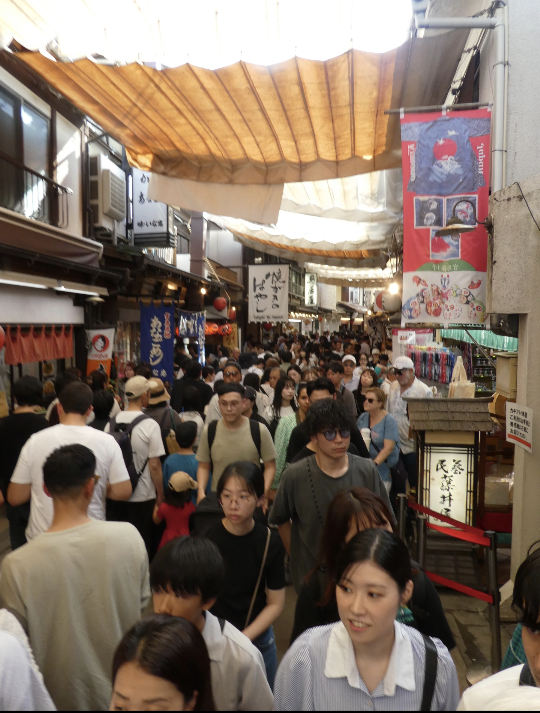
Today’s excursion took us on a 1-hour tram ride south of Hiroshima to Miyajima Island on what was to be the hottest day of this trip… full sun, 31 degrees, felt like 36! To accentuate that, it was also a National Japanese holiday… “Sports Day”, so many thousands of people also decided to go to Miyajima Island. The crowd and the heat at times were a bit stifling.

Here one finds another UNESCO World Heritage site, Itsukushima Jinja shrine. The most striking feature here is the “floating tori gate” which is positioned out from the shore on the mud flats. When the tide comes in, the gate is surrounded by water giving the illusion that it is floating in the water.

This island itself is considered sacred and is populated with deer, also considered sacred. They are tame and unbothered by tourists but you should not touch or feed them. High up in the hills of the island is Mount Misen, the highest point on the island at an elevation of 535 meters. We took the cable car ride up to enjoy spectacular views all around. This place is considered a holy mountain, first opened as a site for ascetic practice by Kukai (Kobo Daishi) in 806 AD (a Buddhist monk). The Reikado Hall at the summit contains a flame that has been burning for over 1,200 years, lit by Kukai himself. This flame was used to light the Flame of Peace in Hiroshima’s Peace Park. We didn’t make the 30 minute hike to see the flame because of the heat but a stoic couple from our group, Alan and Adrienne, did make the trek and got the shot of the flame. I have included their photo in the gallery.

Back down at sea level, we made our way through the throng of tourists and locals, snacked on deep fried oysters, chicken, tempura shrimp and sushi… washed down with cold beer. After a bit of souvenir shopping, we made our way back to the ferry and across the bay to take the tram ride back to Hiroshima, hot and tired but grateful for the experience.

After a couple of hours rest at the hotel, we stepped around the corner into a grocery store to pick up a colorful assortment of items for supper.

Categories
Japan 2025

Himeji Castle and Hiroshima Peace Park

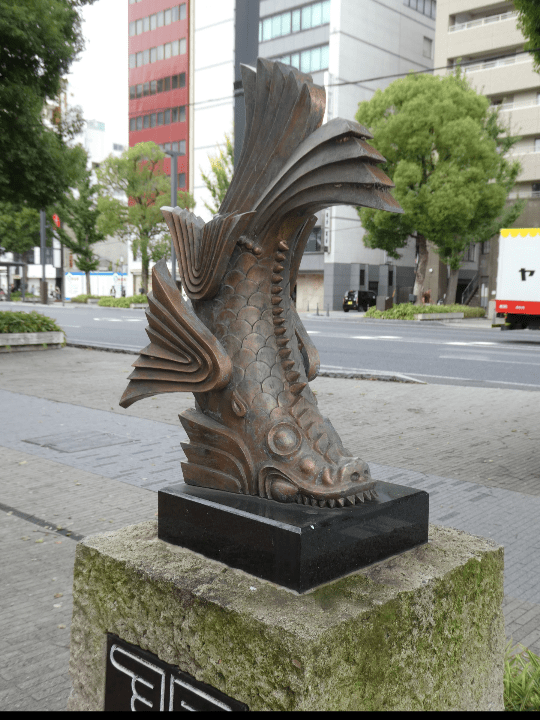
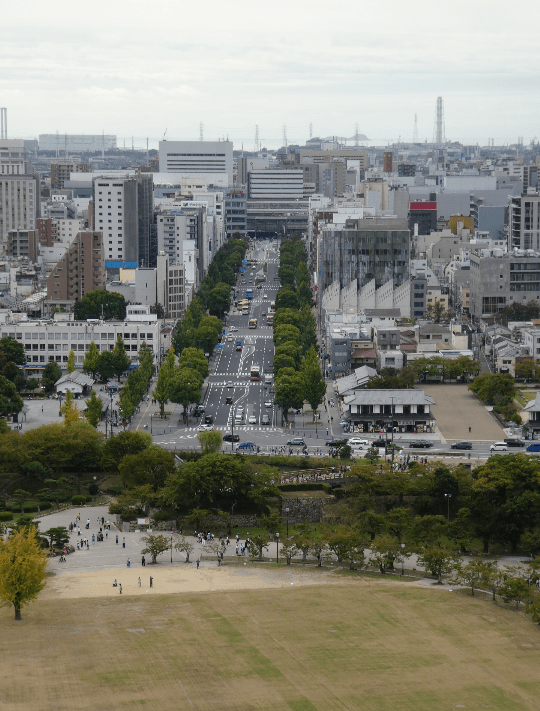
This morning we caught the bullet train from Kyoto to Hiroshima with one important stop into the city of Himeji. This is a modern city because it was almost entirely destroyed during WWII. The attraction we came here to see was spared in the bombing and is visible immediately on exiting the train station. A long beautiful boulevard adorned on both sides with sculptures leads straight to Himeji Castle, sitting high on a hill in the distance.

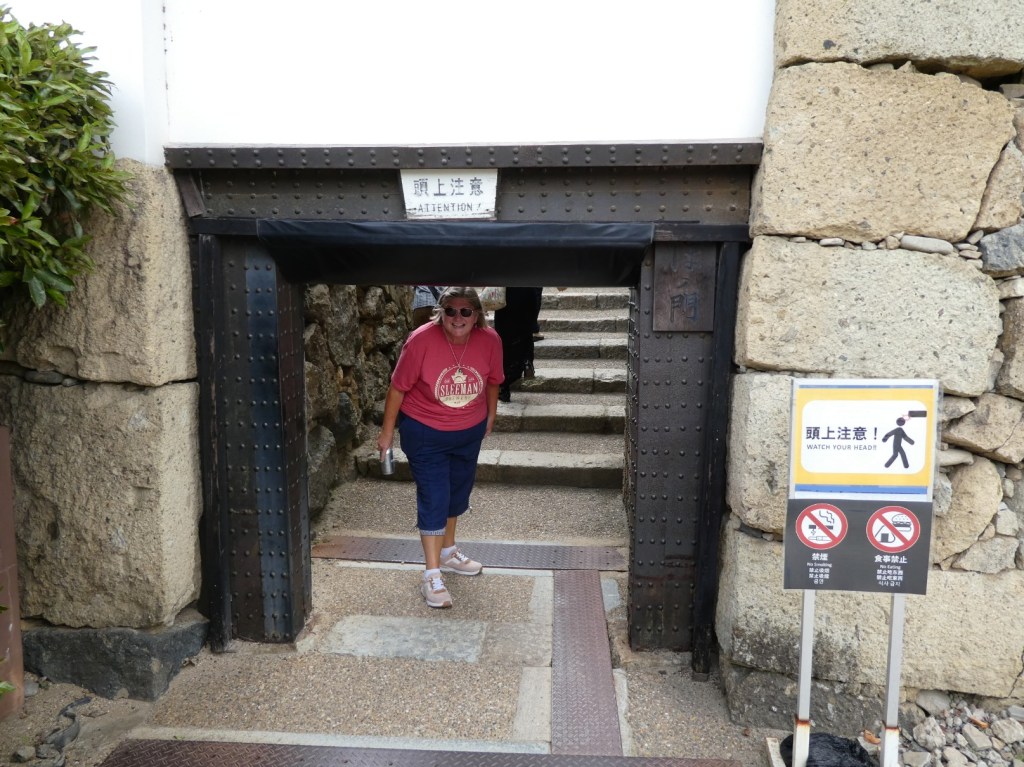
The castle is regarded as the finest surviving example of prototypical Japanese castle architecture, comprising a network of 83 rooms with advanced defensive systems from the feudal period. Common known as the “White Heron Castle” because of its brilliant white exterior and supposed resemblance to a bird taking flight, it is a 7-story pagoda style structure and we climbed the narrow stairs all the way to the top. Coming down was just as tiring on the legs and they were a bit shaky as we made our way back to the train station, shopping for souvenirs along the way.

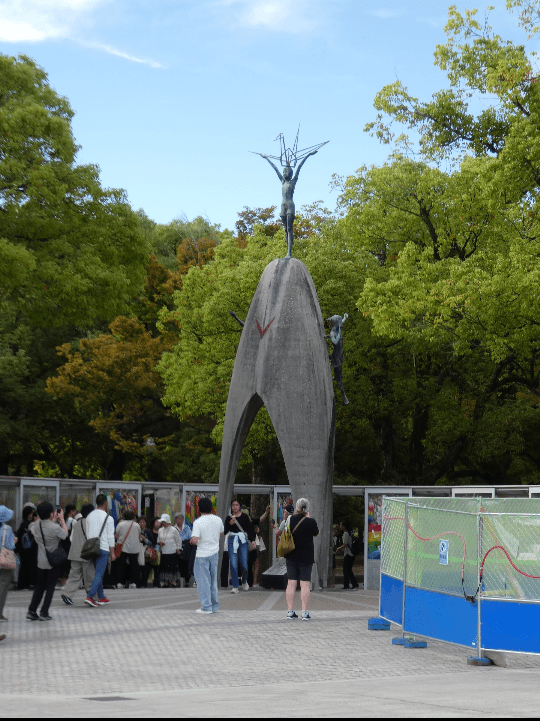
Continuing on, we arrived at Hiroshima in the early afternoon. Our hotel rooms were not quite ready so our guide, Shizuka, took us on a walk to the nearby Peace Park to see a few of the major monuments. We will return here later but the impact of the historical importance is evident all around. Only a few buildings in this city survived the nuclear blast and we saw a couple of them. One in particular tells the story of a man who survived in the basement. He was there just by chance as his 37 workmates above all perished. Very moving.

After checking in, our Canadian party walked to a nearby skyscraper and to the 17th floor rooftop bar where we enjoyed the panoramic views over Hiroshima all the way to the mountains. We sipped our cocktails to a beautiful sunset.

Supper was a group experience at a nearby teppanyaki restaurant where we were introduced to a traditional Hiroshima delight called okonomyiaki. It is a double pancake filled with whatever you like (mine had shrimp and scallops). It arrives to your table and is placed on the hot grill in the middle where you cut and hack it apart and spoon it onto your plate. Very delicious and fun for the whole group.

Categories
Japan 2025

Kinkaku-ji Temple and Nijo Castle

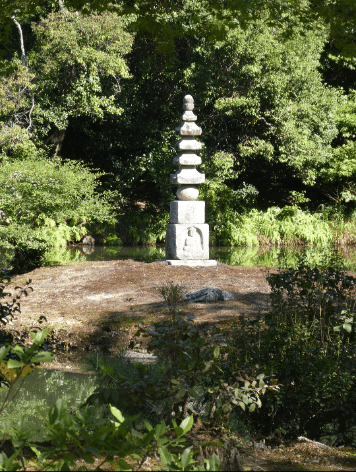
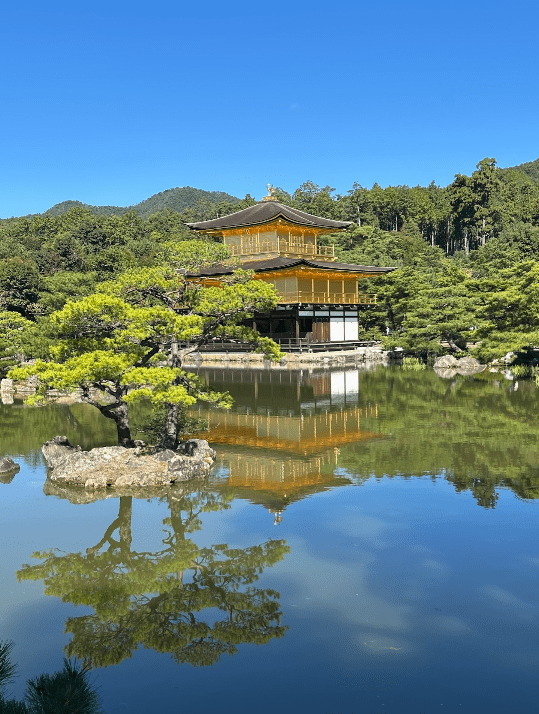
Today we visited two more UNESCO World Heritage sites starting with Kinkaku-ji Temple to the north of Kyoto. Better known as “The Golden Pavilion”, this Buddhist temple’s main attraction is the 3-story pagoda in the middle of a small lake. The top two floors are completely covered in gold leaf and it shone brightly for us on this beautiful sunny day. We strolled through the peaceful and serene zen gardens while birds twittered in the bonsai trees all around. Of course we purchased souvenirs at the gift shop.

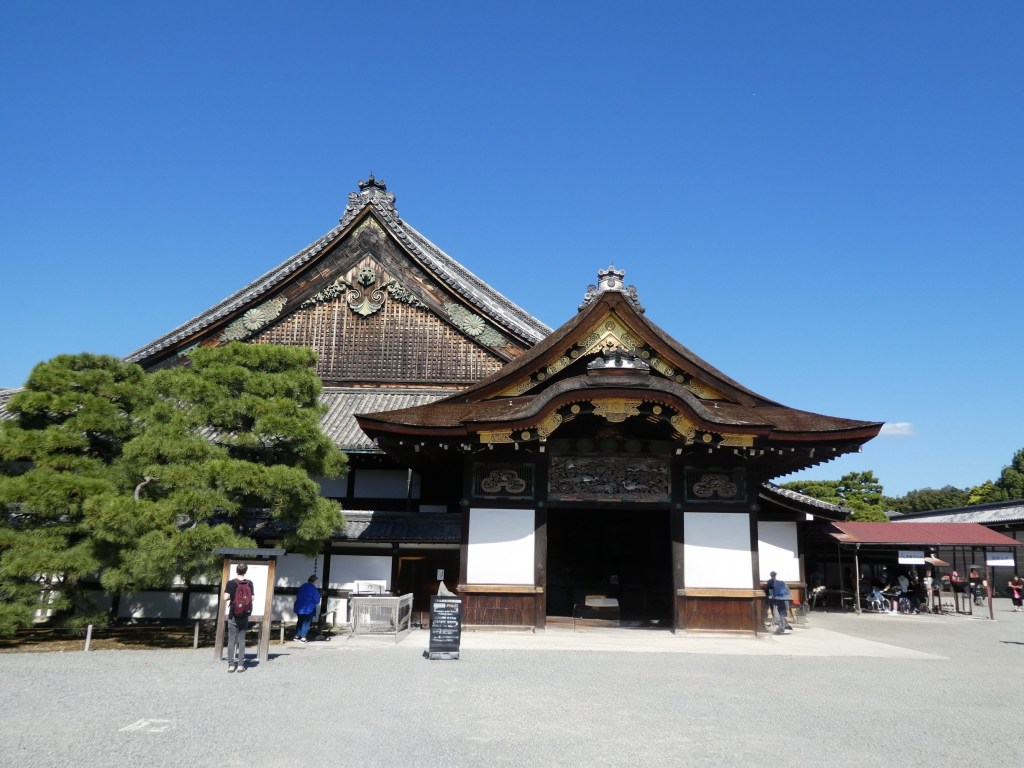
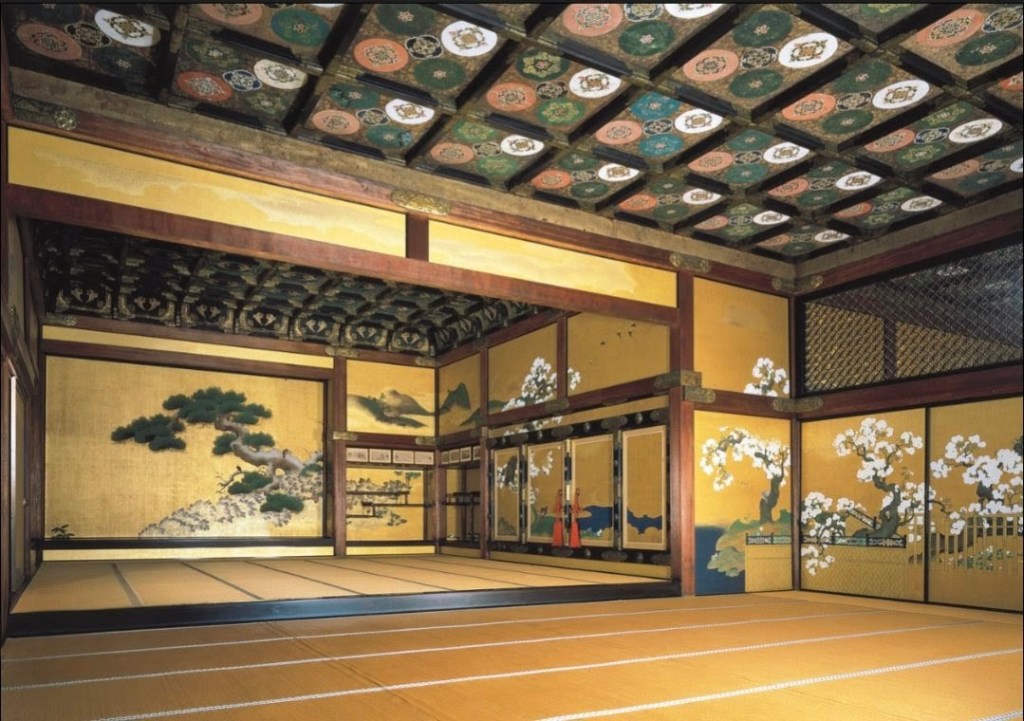
Next we visited Nijo Castle. It was built in 1603 as the Kyoto residence of Tokugawa Ieyasu, the first shogun of the Edo Period (1603-1868). Photos are not allowed inside so I added some pics from the website to show the beautiful interior. It is a sprawling complex decorated with sliding screen paintings by the Kano school, the greatest school in the history of Japanese painting, as well as colorful transom carvings and decorative metal fittings. It is a gorgeous architectural masterpiece befitting a shogun’s palace.

On our own for a free afternoon, we found lunch at a small family-run cafe complete with interior gardens and ishi-dōrō or stone lanterns. The hostess welcomed us and told us this building was the former residence of her grandmother and that her mother was born here. The hostess and her husband had opened the cafe one year ago and gave us cookie souvenirs to commemorate the anniversary. The almond toast and chai ice cream were excellent.

After lunch, we visited the Samurai-Ninja museum to learn about the history of Japan and the roles of the Samurai (warriors) and ninja (spies/assassins). An excellent guided tour ended with a shuriken (ninja throwing star) contest. Ryan did not win but came close. The entire experience was not only educational but great fun too. Ryan was in his glory.

Supper was at a restaurant near our hotel… an oishī (delicious) assortment of snack food plates washed down with beer.

In the evening, our guide, Shizuka, reserved tickets for our entire group to see a 50-minute show at the Gion Corner Theater in the Geisha district. What a show! We saw seven short performances, each 5-10 minutes some of which are classified as World Heritage Intangible practices. Chanoyu (Geisha Tea Ceremony), Ikebana (flower arrangement), Koto music (14 stringed wooden zither plucked with finger tips), Bugaku dance (performed by Maiko… Geisha apprentices), Kyogen comedy, Bunraken puppet theater and Noh play (Japanese dance and song performed by masked actors). Photos are not allowed so, once again, I have included shots from the program brochure.

Categories
Japan 2025

Sanjūsangendō Temple and Gion Walking Tour

After a speedy ride through the breath taking mountain range of south central Japan while enjoying a yummy Bento box lunch, we arrived in Kyoto and we’re greeted by our guide for the second half of the tour, Shizuka.

We immediately set out to visit the first of several UNESCO World Heritage sites in Kyoto, Sanjūsangendō Temple. Founded in 1164 and measuring 120 meters, this Buddhist temple hall is Japan’s longest wooden structure. In the center of the main hall sits a large, wooden statue of a 1000-armed Kannon (Senju Kannon) that is flanked on each side by 500 statues of human sized 1000-armed Kannon standing in ten rows. Together they make for an awesome sight. Photos are not allowed in the temple so I copied a few from the website to add in the gallery.

Continuing on, we stopped briefly for a taiyaki snack; a popular Japanese street food made from a sweet pancake-like batter poured into a fish-shaped mold. It is filled with sweet red bean paste or other fillings like chocolate, custard, or matcha.

Then we entered the Gion district famous for its Geisha. The buildings are all wooden, modestly decorated and very old. No skyscrapers here as bylaws prevent vertical development. Shizuka told us Geisha sightings are rare because over tourism and disrespectful harrassment has made them cautious and reclusive. We were very lucky when one appeared on her way to work. The street crowd fell suddenly silent while she passed by as testament to how revered these performing artists are. Just moments later, we caught sight of a Maiko, a Geisha apprentice. The difference is in the kimono, the hair and adornments. Whereas once there were nearly 3000 Geisha in Kyoto, now there are only 250 remaining. We hope to see a performance at the Gion Corner theater tomorrow if tickets are available.

Supper was at a tiny second floor restaurant along the Kamo River. Plates of venison, quail and shrimp were washed down with Kyoto beer. And that was a day. We caught the bus back to the hotel and crashed.

Categories
Japan 2025

Lake Kawaguchi and Mt. Fuji

A nice coach bus ride got us to Lake Kawaguchi in two hours. Just before we arrived, we caught a glimpse of Mt. Fuji with it’s cone peeking above the clouds. Lucky us because an hour later, the clouds had completely covered it.

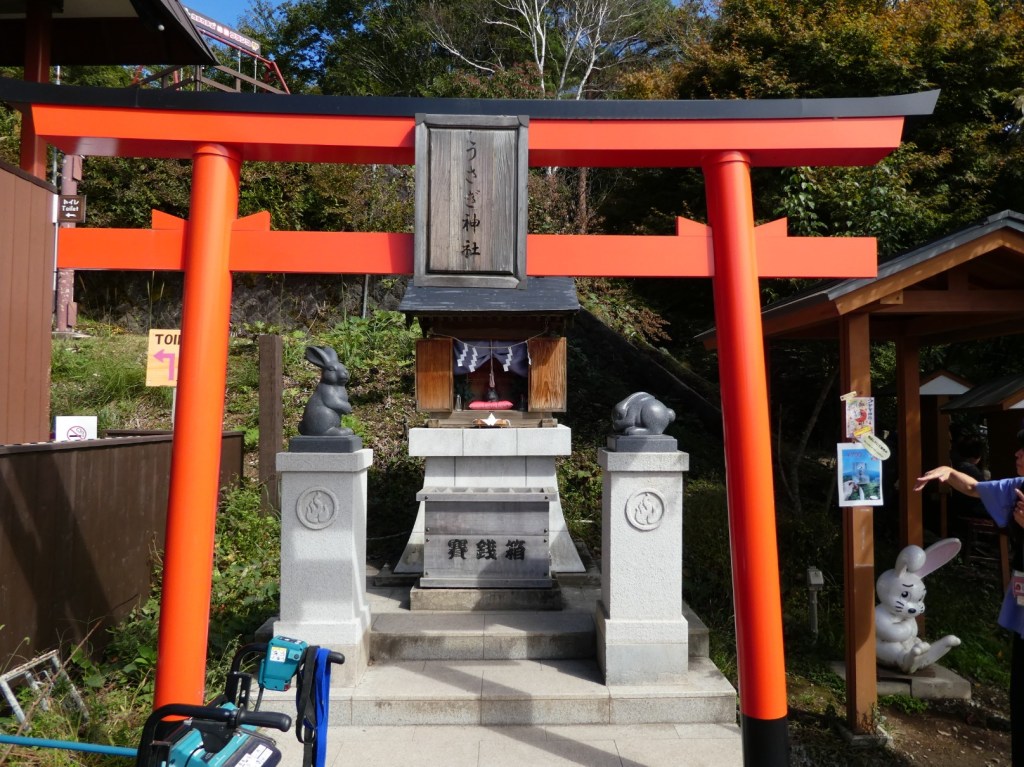
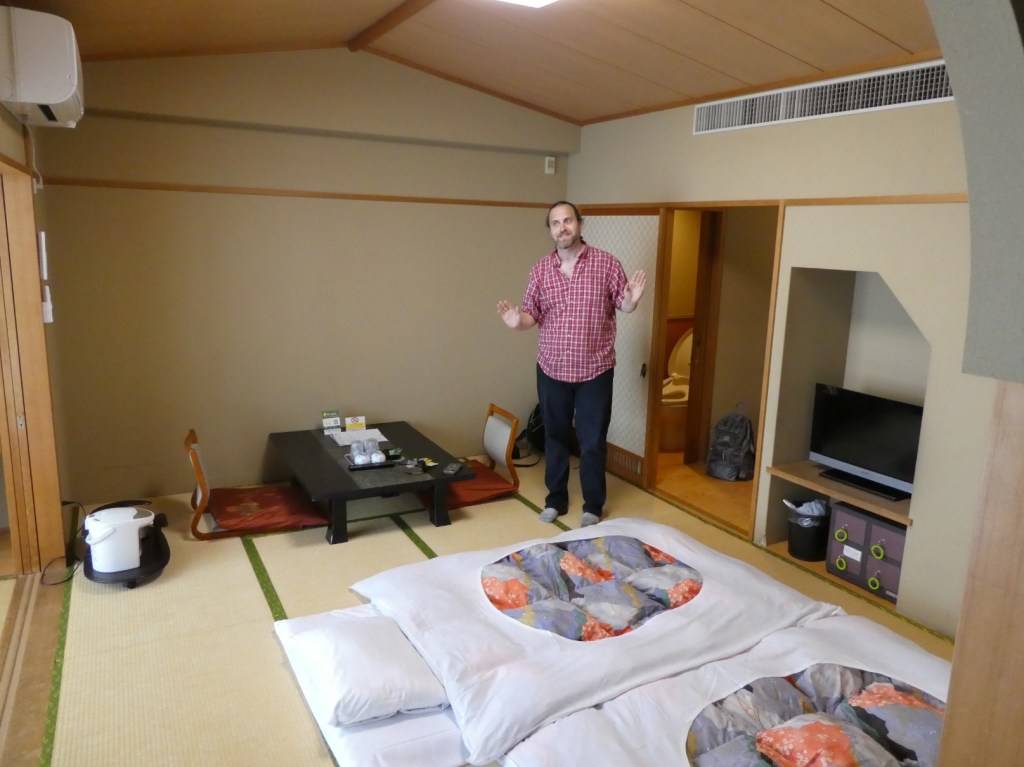
Our hotel is a traditional Japanese Ryokan, where the beds and chairs are flat to the floor. Too early to check in on arrival, we dropped off our bags and our guide took us on a cable car excursion up into the hills overlooking the lake. When visible, this is the spot to see Mt. Fuji in all its glory. However, not today but we did enjoy spectacular views of Lake Kawaguchi and learned the foke lore story of the rabbit and the raccoon. Very popular with Japanese children. There is a shrine up there to rabbits.

Down again, we did some souvenir shopping along main street until it was time to check into the hotel. And what a beautiful hotel! The prize feature are the onsens… pure mountain water hot springs, separate ones for men and women. The rule is to bathe naked. Ryan and I tried it out before dinner. So hot, so relaxing, so therapeutic.

Dinner was a group buffet in the banquet hall. Such a spread of food! All you can eat and drink. I tried everything and washed it all down with sake. I may have perhaps had a bit too much sake but it was fantastic and great fun to socialize with the group. We even sang Happy Birthday to Yogi and a couple of other group members.

After supper, a couple of our group members (Alan and Adrienne from New Zealand) took a walk along the lake. The clouds had lifted and they got a photo of Mt. Fuji in the twilight. They shared it with us and I have included it in the gallery. It is a stunning shot.

The next morning, I went to the onsen again and I had it all to myself. Good therapy for the muscles. Breakfast was a full spread buffet and then we packed up to check out and make our way to the bullet train for the commute to Kyoto.

Categories
Japan 2025

Harajuku, Shibuya and Shinjuko

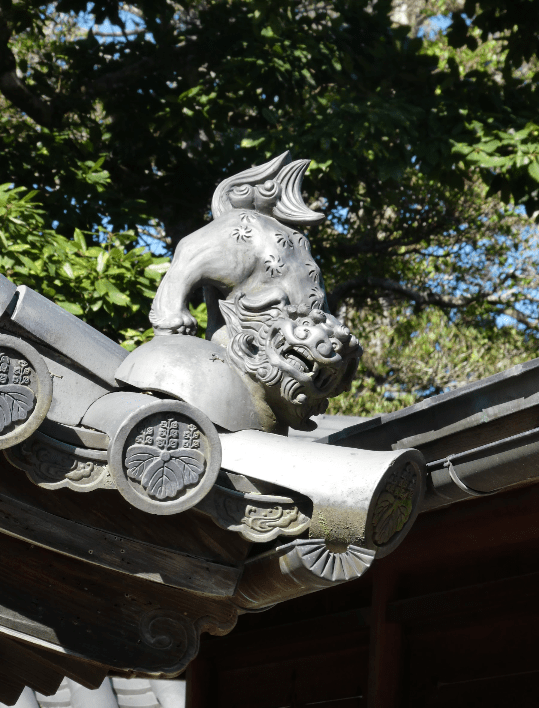
Today’s group excursion took us into three neighborhoods in the west end of Tokyo. We started in Harajuku where we visited Meiji Shrine dedicated to Emperor Meiji. It was fascinating to learn about Japan’s favorite Emperor who died in 1912. He is best known for modernizing Japan to keep pace with the rest of the world. His shrine is in a beautiful park surrounded by 100,000 trees comprised of 365 different species. Here we learned how to properly bow before passing through the tori gates and how to properly pray at the shrine.

After lunch and a bit of souvenir shopping in Harajuku, we commuted to Shibuya to experience the world’s most famous street crossing, the “Shibuya Scramble”. When the walk signs turn green, all vehicle traffic stops and 1500 people swarm into the crossings from five directions. Quite systematic and bemusing to witness. Also at the Shibuya station, we saw the statue of the famous dog, Hachikō, who came to the station every day for 10 years to wait for his deceased owner.
Then we returned to our hotel for an afternoon rest. Supper was at Ramen Alley in Tokyo Station for a confusing but interesting experience in how to order food… all done electronically. The staff were wonderful and very accommodating.
Then it was back to Shinjuko to see the lights and they did not disappoint. High up on one of the skyscrapers, there is a giant head sculpture of Godzilla which lights up on the hour and blows smoke. How cool! All the skyscrapers are multicolored for a 360 degree vertical neon gallery. We strolled through the narrow alleys of Golden Gai, the drinking section of Shinjuku, to peek into some of the tiny family-run bars, many with only 3 or 4 seats. Then on to Shibuya for one last look at the Hachikō statue and to oggle at a new collection of illuminated skyscrapers.

Tokyo has been beyond our imaginations. For a city of 40 million people, it is quiet, clean, orderly and utterly magnificent. Tomorrow we will leave Tokyo and head west across the country.